

Second room
Theme: "Living on the Moon - Legal and Societal challenges"
18 November 2026 at 14:00 – 17:15
Venue MIX, 25 Boulevard du Souverain, Watermael-Boitsfort
Speakers & Presentations
Topic 1
Lex Lunae
Jean-François Mayence
Acting Head of the Legal Department of the Belgian Federal Office for Science Policy-BELSPO
Topic 2
What time is it on the Moon?
Pascale Defraigne
Project Leader at Royal Observatory of Belgium
Topic 3
Space Weather in EUMETSAT
Andrew Monham
Head of LEO Flight Operations – Eumetsat
Topic 4
Sustainability in outer space
Prof. Walter Peters
President-Emeritus of the International Space University (ISU), Strasbourg, France
Topic 5
Ethics of Outer Space: some guidelines for Lunar activities
Prof. Dominique Lambert
Professor emeritus of the University of Namur, member of the Royal Academy of Belgium
Topic 6
Medicine beyond Earth – the next frontier of human health
Carlo Iorio
Director of the Centre for Research and Engineering in Space Technologies – CREST, Service de Aero-Thermomécanique – ATM, Université libre de Bruxelles
Speakers

Topic 1: Lex Lunae
Jean-François Mayence
Acting Head of the Legal Department of the Belgian Federal Office for Science Policy (BELSPO)
JFM works with BELSPO since 01/01/1999. He is member of the Belgian Delegation to UNCOPUOS (United Nations Committee for the Peaceful Uses of Outer Space) and was member of the Belgian Delegation in several ESA committees and boards. He is the author of the text of the Belgian space law and of its implementing decree. He has lectured in many Space Law classes in Belgium, Europe and beyond, including during five years as teaching practionner in KU Leuven. He is a scientific collaborator of University of Liège. He has contributed to several international academic and scientific publications
The current student generation will face a different world from the one at the origin of our rules, our policies, our practices and our convictions. In that world, science, politics and law will be challenged to evolve. But our present must already provide the solid ground on which the new social, economic, cultural and ecologic reality will be built. The law of the Moon is a good example of a legal domain where we must choose which doors need to be open, starting with the ones leading to sustainability and equity.

Topic 2: What time is it on the Moon?
Pascale Defraigne
Chef de Projet à L'Observatoire royal de Belgique, Responsable du service Temps-Fréquence.
Pascale Defraigne received her Ph.D. in Sciences at the Université Catholique de Louvain (UCLouvain) in 1995. She then started research activities at the Royal Observatory of Belgium in the field of time and frequency metrology, especially associated with the Global Navigation Satellite Systems (GNSS).
She is currently head of the Time Laboratory responsible for the generation of the Belgian Legal Time, and contributes to international works on the international time scales and time unit definition and realization. She furthermore contributes to the timing and synchronization system of the European Galileo constellation, and
of the future European Moonlight and Novamoon missions of the ESA.
She chairs several working groups of the international Consultative Committee for Time and Frequency and is member of the International Committee of GNSS at the United Nations.
In view of the regain of interest in Moon exploration with some applications requiring high precision timing and positioning, it is necessary now to set up a relativistic lunar reference frame, with an associated reference time. I will present the differences between Moon time and Earth time, and how Moon time can be realized with atomic clocks.

Topic 3: Space Weather in EUMETSAT
Andrew Monham
Space Environment Sustainability Coordinator at EUMETSAT
Andrew has been active in the space sector for 40 years, in ESA, private industry and EUMETSAT, covering roles in system development, operations, business development and most recently space environment matters. One of the tasks of this role is assessing the feasibility of applying EUMETSAT’s capabilities in meteorological space and ground segment operations towards a similar role in the provision of space weather data in partnership with other European institutions.
"If you want to go fast, go alone. If you want to go far, go together”
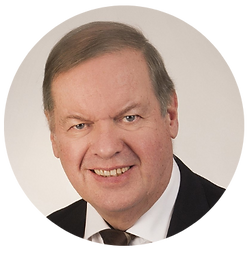
Prof. Walter Peeters
President-Emeritus of the International Space University (ISU), Strasbourg, France
Prof. Walter Peeters is the President-Emeritus of the International Space University (ISU), Strasbourg, France. In his career he initially covered management positions in the construction and petrochemical industries, joining in 1983 the European Space Agency (ESA) where he became a.o. Head of the Coordination Office of the European Astronaut Center in Cologne.He joined ISU in 2000 as professor in Space Business and Management, nominated Dean in 2005 and became President in 2011, then President Emeritus since 2018.He advises government organizations on space activities and creation of national space agencies. He is a full member of the International Academy of Astronautics and is member of the editorial board of several space journals.He obtained degrees in engineering and applied economics (Catholic University of Louvain), an MBA (Louvain, Cornell University) and a Ph.D. in Engineering (TU Delft, Aerospace Faculty). He authored over 90 articles on space commercialization and NewSpace Economy, the book Space Marketing (Kluwer, 2000) and an IAA Report on Suborbital Spaceflight (IAA, 2014).His present focus is on NewSpace research and entrepreneurship amongst others leading a space incubator at ISU and supporting space start-ups.
Topic 4: Sustainability in outer space
Outer Space exploration is increasingly shifting from governmental initiatives to activities by so-called Astropreneurs. This raises the question on sustainability aspects of these private initiatives. In analogy with Sustainable Development Goals (SDGs), therefore a set of Cosmic Development Goals (CDGs) is suggested to ensure future sustainable space exploration for the long-term benefit of humanity.

Topic 5: Ethics of Outer Space : some guidelines for Lunar activities
Prof. Dominique Lambert
Professor emeritus of the University of Namur, member of the Royal Academy of Belgium
Physicist and Philosopher. His study are dedicated to History of Science (cosmology) and to Ethics of new technologies.
We will study some ethical problems coming from Outer Space activities and especially those concerning the Moon. In this context, we will propose a reflection on the foundations of the 1967 Space Act as well as on its possible improvement.

Topic 6: Medicine beyond Earth – the next frontier of human health
Carlo Iorio
Director of the Centre for Research and Engineering in Space Technologies – CREST, Service de Aero-Thermomécanique – ATM, Université libre de Bruxelles
Dr Carlo Saverio Iorio is an adjunct professor at the York University in Toronto - Canada and director of the Centre for Research and Engineering in Space Technologies (CREST) of the University of Brussels - Belgium. He has more than 25 years of experience in Space-related science and technology programmes. His interests are mainly in heat and mass transfer phenomena, and material science for biomedical applications. He has coordinated more than 25 European Space Agency-supported experiments in microgravity taking advantage of the available Space platforms including sounding rockets, parabolic flights, satellite capsules and the International Space Station. Recently, he has been appointed as an expert on Space policy at the European Commission General Directorate on Defence, Space, and Industries. The CREST has been recognized in 2025 as an official Ground-Based Facility of the European Space Agency.
Sustained life on the Moon will require us to understand, protect, and engineer for the limits of the human body in an environment it was never designed to inhabit. For your generation, healthcare beyond Earth is not only a medical challenge, but a frontier where biology, engineering, materials science, and space systems converge. The questions you choose to solve today may define how humanity lives safely and sustainably beyond Earth tomorrow.

Sponsors
Switch to Space is made possible by the invaluable support of our sponsors. Thank you for helping us inspire and empower the next generation of space enthusiasts.
PREMIUM SPONSOR

GOLD SPONSORS


SILVER SPONSORS


BRONZE SPONSORS


MOON SPONSORS


MERCURE SPONSORS


Switch to Space can change your career path!
A great event that undoubtedly will leave a mark on all students and young professionals.
It brings together experts from the Belgian space industry, research centres, universities, Belspo, ESA's strategic department, the EU department, European innovation - New Space - Space Defence and Eumetsat...
Space experts will share with you the latest technological advances, their passion and their vision of space.
An awe-inspiring opportunity for students, young professionals and space professionals to get together during an amazing day!
Dominique Tilmans

Sponsors
Switch to Space is made possible by the invaluable support of our sponsors. Thank you for helping us inspire and empower the next generation of space enthusiasts.
PREMIUM SPONSORS

GOLD SPONSORS
SILVER SPONSORS
BRONZE SPONSORS
MERCURE SPONSORS

Switch to Space can change your career path!
A great event that undoubtedly will leave a mark on all students and young professionals.
It brings together experts from the Belgian space industry, research centres, universities, Belspo, ESA's strategic department, the EU department, European innovation - New Space - Space Defence and Eumetsat...
Space experts will share with you the latest technological advances, their passion and their vision of space.
An awe-inspiring opportunity for students, young professionals and space professionals to get together during an amazing day!
Dominique Tilmans